Micro Moments of Care in Behavioral Health:
How small, consistent interventions support emotional regulation, continuity of care, and proactive mental wellness
Mental Wellness Support Designed for Everyday Life
Mental health challenges are increasingly woven into the pace and demands of everyday life. Across workplaces, schools, healthcare systems, and homes, individuals are navigating chronic stress, emotional fatigue, burnout, anxiety, and social disconnection while trying to maintain productivity and daily responsibilities. Even without a diagnosed mental health condition, many individuals remain susceptible to the effects of chronic stress and the ongoing pressures of modern life. For many, emotional strain develops gradually through the accumulation of everyday stressors rather than from a single identifiable crisis.
This reality is reshaping how behavioral healthcare is understood. Mental wellness can no longer be approached solely through episodic intervention or crisis response. While acute psychiatric care remains essential, there is growing recognition that sustainable mental health support also depends on proactive, accessible interventions integrated into daily routines.
Recent estimates from the World Health Organization indicate that approximately 15% of working-age adults are living with a mental health disorder, while depression and anxiety contribute to roughly 12 billion lost working days annually worldwide (World Health Organization [WHO], 2024). In addition, the WHO reports that approximately 1 in 7 adolescents aged 10–19 experience a mental health condition, highlighting that these challenges extend beyond working-age populations and affect younger groups as well (World Health Organization, 2024). At the same time, healthcare systems are facing increasing pressure from rising behavioral health demand, workforce shortages, and barriers to timely mental health access.
These pressures reveal an important gap in traditional models of care. Many individuals do not require constant intensive intervention, but they do benefit from consistent emotional support, self-awareness tools, and opportunities to regulate stress before it escalates into crisis. Without accessible and sustainable systems for early support, emotional distress often progresses unnoticed until functioning becomes significantly affected.
At Precise Behavioral, mental wellness is viewed as an ongoing continuum rather than a reactive process. Small, intentional interventions, often referred to as micro moments of care, reflect how behavioral healthcare can become more proactive and sustainable within everyday life.
Supporting Emotional Regulation Through Small, Consistent Interventions
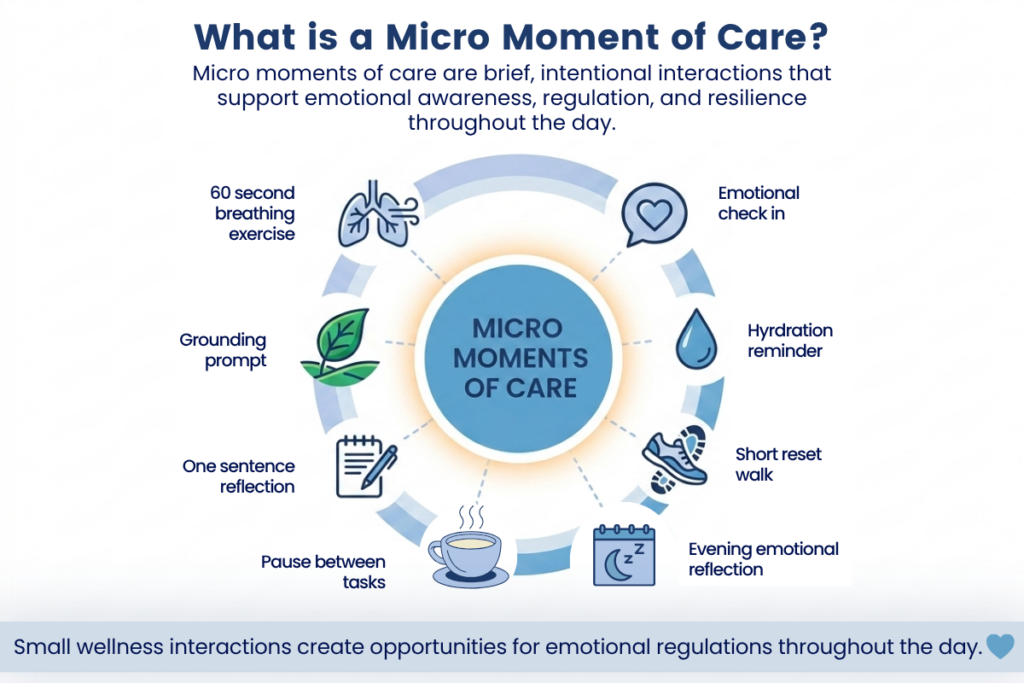
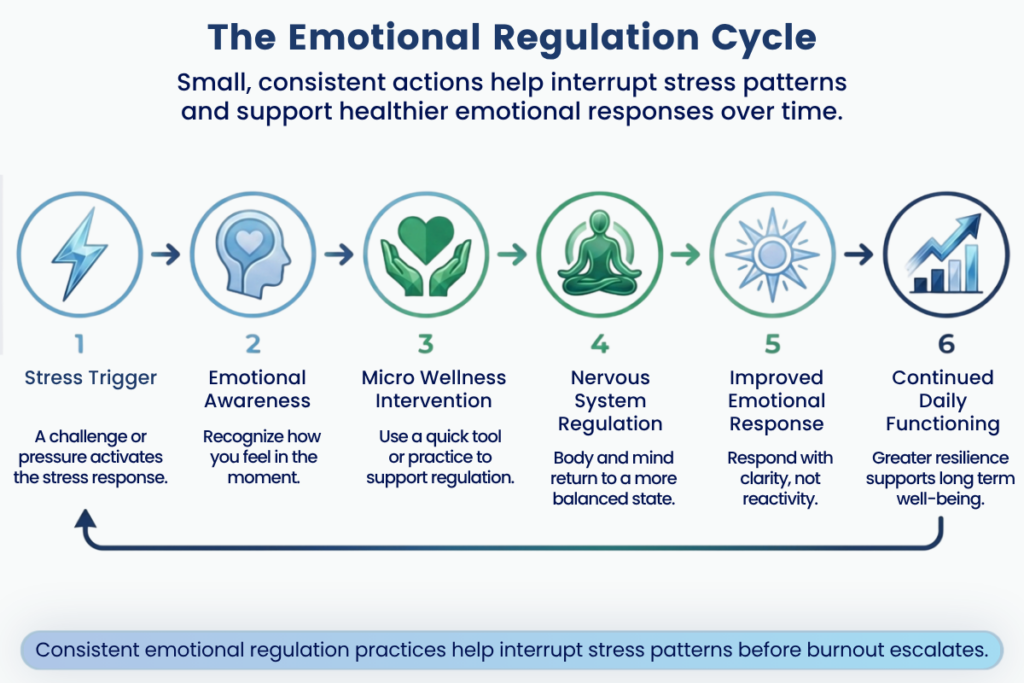
Unlike large-scale wellness interventions that often require significant time, structure, or emotional energy, micro moments are designed to fit naturally into existing routines. For example, while brushing your teeth in the morning, you might look in the mirror and say three kind or encouraging things to yourself. Small intentional practices like these can easily be woven into everyday life while still supporting emotional well-being.
Examples may include:
- Guided breathing exercises before stressful tasks
- Brief digital mood check-ins throughout the day
- Supportive wellness prompts during periods of elevated stress
- Short grounding exercises between responsibilities
- One-minute mindfulness practices
- Emotional reflection prompts at the end of the day
- Digital reminders encouraging pauses, hydration, or rest
- Stretching or taking a short walk between meetings or study sessions
- Listening to a calming audio or meditation during a commute
- Practicing gratitude by naming one positive moment from the day
- Sending a quick supportive message to a friend or loved one
- Taking a few moments to step outside for fresh air and sunlight
Although individually small, these interventions can meaningfully influence emotional well-being when practiced consistently over time. Behavioral science research continues to demonstrate that sustainable habits are more likely to succeed when they are achievable, repeatable, and integrated into daily behavior patterns (Singh et al., 2024).
Micro interventions also help address an important challenge in behavioral healthcare: emotional dysregulation often develops gradually. Stress accumulation, cognitive overload, disrupted sleep, emotional exhaustion, and anxiety frequently intensify over time before becoming clinically visible. Brief moments of intentional regulation throughout the day create opportunities to interrupt these cycles earlier.
Research on preventative behavioral health strategies increasingly emphasizes the importance of early intervention, emotional self-monitoring, and integrated support systems in reducing long-term mental health burden (Magomedova & Fatima, 2025). Approaching emotional wellness proactively rather than reactively allows behavioral healthcare systems to support individuals before distress reaches crisis levels.
Additionally, research examining mindfulness-based and stress-management interventions has shown that repeated emotional regulation practices may improve resilience, emotional awareness, and stress reduction outcomes across diverse populations (Kriakous et al., 2021). While these interventions are not substitutes for clinical psychiatric care, they can strengthen emotional self-awareness and support continuity of care across levels.
This approach reflects a broader shift within behavioral healthcare toward prevention-oriented models that emphasize early support rather than relying exclusively on intervention after distress has escalated.
The Growing Role of Digital Behavioral Health Tools
As behavioral health systems continue evolving, digital technologies are increasingly integrated into proactive mental wellness strategies. Digital mental health tools make it possible for people to stay engaged with their emotional well-being beyond scheduled clinical appointments.
This shift is particularly important in environments where access to mental healthcare remains limited by clinician shortages, geographic barriers, cost, or long wait times. The Health Resources and Services Administration continues to identify significant behavioral health workforce shortages across many regions of the United States, contributing to delays in psychiatric and therapeutic care access (HRSA, 2024).
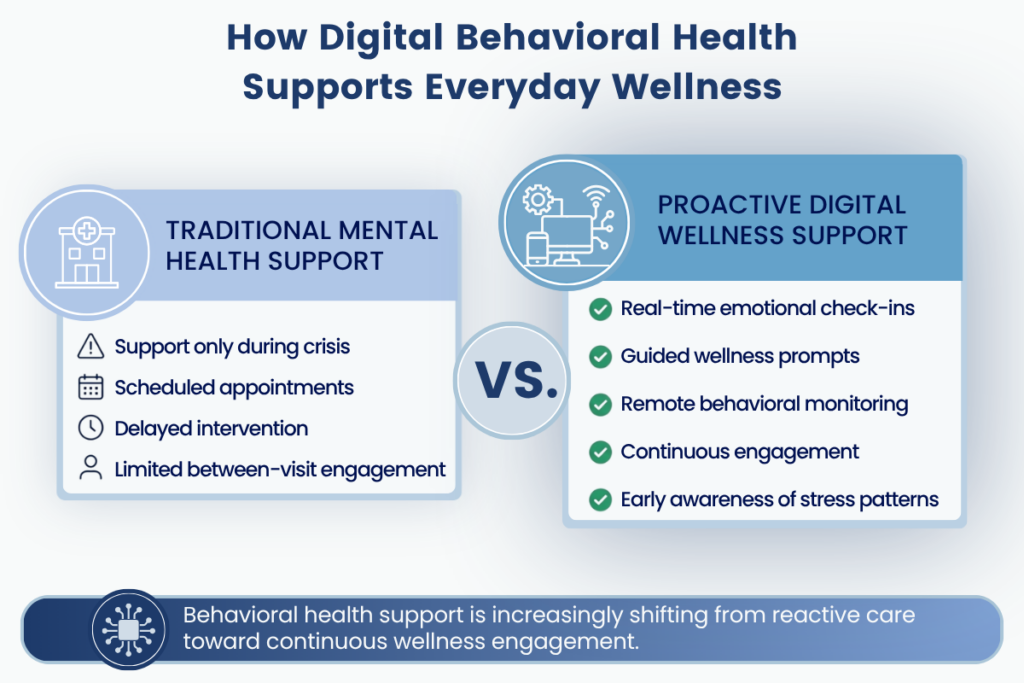
Digital wellness tools can help bridge portions of this gap by supporting:
- Remote emotional monitoring
- Personalized wellness prompts
- Mood and behavioral tracking
- Guided grounding and breathing exercises
- Continuous engagement between appointments
- Early identification of stress-related behavioral patterns
Effective digital mental health support is not intended to replace clinicians or human connection. Instead, these tools function most effectively when integrated into broader systems of care that preserve clinical oversight, evidence-based practice, and continuity across settings.
At Precise Behavioral, digital behavioral health innovation is approached through a human-centered and clinically grounded framework. Technology is used not simply to increase efficiency, but to strengthen accessibility, continuity, and proactive engagement with mental wellness throughout everyday life. Within the Precise Behavioral app, users can engage with tools designed for micro moments, such as brief mood check-ins, guided breathing exercises, and timely prompts that encourage reflection, grounding, or pause during the day.
When thoughtfully designed, digital support tools can help individuals remain connected to their emotional well-being in ways that feel practical and sustainable.
Continuity of Mental Wellness Beyond Crisis Care
Behavioral healthcare systems have historically focused heavily on intervention during moments of acute need. While crisis response remains essential, many mental health challenges exist long before an individual enters a clinical setting. Emotional distress often emerges gradually through prolonged stress exposure, social isolation, emotional fatigue, workplace strain, and cumulative psychological burden.
Without consistent support during these earlier stages, emotional difficulties may progress into more severe symptoms that require higher levels of intervention. This gap between daily emotional stressors and formal mental healthcare represents an important area of opportunity within modern behavioral health systems.
Micro moments of care help support continuity across this gap by encouraging individuals to engage with emotional well-being consistently rather than only during periods of crisis.
This continuity matters because emotional regulation is not built through isolated interventions alone. It develops gradually through repeated moments of self-awareness, reflection, and supportive behavioral reinforcement.
Building Sustainable Models of Behavioral Wellness
The growing demand for mental health services requires care models that are not only clinically effective, but also scalable and more accessible than traditional models. As healthcare systems continue facing workforce strain and rising demand, proactive behavioral wellness strategies will likely become increasingly important components of broader mental healthcare delivery.
Sustainable mental wellness models are built through:
- Accessible and flexible support structures
- Continuous engagement with emotional wellbeing
- Integration of digital behavioral health tools
- Early intervention and prevention-focused strategies
- Clinically grounded care frameworks
- Human-centered approaches to emotional support
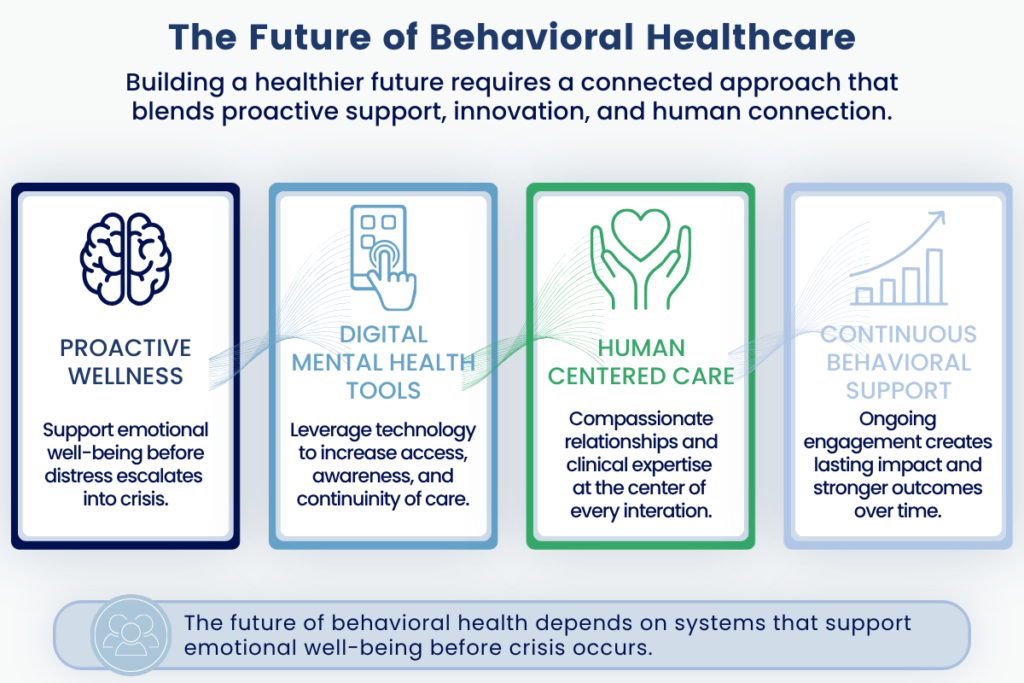
Micro moments of care represent one component of this broader shift toward integrated behavioral wellness systems.
At Precise Behavioral, these principles help shape behavioral health approaches that meet individuals where they are, not only during moments of crisis, but throughout everyday life.
Meaningful emotional support is not always defined by dramatic interventions. More often, it is strengthened through small moments of awareness, emotional regulation, and intentional care practiced consistently over time.
Sustainable mental wellness is not built in a single breakthrough moment.
It is built through the moments people return to every day.
Sources:
World Health Organization. (2024). Mental health at work. https://www.who.int/news-room/fact-sheets/detail/mental-health-at-work
World Health Organization. (2024). Mental health of adolescents. https://www.who.int/news-room/fact-sheets/detail/adolescent-mental-health
Singh, B., Murphy, A., Maher, C., & Smith, A. E. (2024, December 9). Time to form a habit: A systematic review and meta-analysis of health behaviour habit formation and its determinants. Healthcare (Basel, Switzerland). https://pmc.ncbi.nlm.nih.gov/articles/PMC11641623/
Magomedova, A., & Fatima, G. (2025, January 19). Mental health and well-being in the modern era: A comprehensive review of challenges and interventions. Cureus. https://pmc.ncbi.nlm.nih.gov/articles/PMC11836072/
Kriakous, S. A., Elliott, K. A., Lamers, C., & Owen, R. (2021). The effectiveness of mindfulness-based stress reduction on the psychological functioning of healthcare professionals: A systematic review. Mindfulness. https://pmc.ncbi.nlm.nih.gov/articles/PMC7511255/
Health Resources and Services Administration. (2024). Behavioral health workforce projections. https://bhw.hrsa.gov
Written by Gabriella Aaron
About the Authors
Gabriella Aaron is a Clinical Research and Content Development Specialist at Precise Behavioral, Inc., with a background in Medical Microbiology and a passion for digital mental health solutions.
Editorial Contributors
This piece was edited by Greta Baker and Kirsten Guiliano.