
An emergency department visit can be a critical turning point for someone experiencing a behavioral health crisis. Whether a patient arrives with severe anxiety, worsening depression, suicidal thoughts, or another urgent psychiatric concern, the immediate priority is to assess their condition, address safety concerns, and determine the appropriate next steps. However, when the patient is ready to leave, another important stage of care begins. The support available in the days and weeks following discharge can determine whether the patient successfully connects with treatment or encounters additional barriers.
For hospitals and healthcare organizations, this transition presents an important opportunity to strengthen continuity of care. A discharge plan may recommend outpatient treatment, medication management, or community-based services, but recommendations alone do not guarantee that patients will receive follow-up care. Building a more reliable pathway requires coordinated clinical teams, accessible services, effective communication, and systems that help providers identify when patients need additional assistance.
Why the Transition After Emergency Care Matters
Emergency departments play an essential role in responding to urgent behavioral health needs, but they are not designed to provide every aspect of ongoing psychiatric treatment. Once a patient is medically and psychiatrically appropriate for discharge, continued care often depends on services delivered outside the hospital.
This transition can be challenging, particularly when patients must navigate unfamiliar healthcare systems while recovering from a distressing experience. Limited appointment availability, transportation difficulties, financial concerns, insurance restrictions, and uncertainty about the recommended treatment can all interfere with timely follow-up.
Communication gaps between healthcare organizations create additional challenges. Emergency department clinicians may recommend a specialist but have no way to confirm whether an appointment was scheduled or completed. Outpatient providers may receive incomplete discharge information, making it more difficult to understand the patient’s recent clinical needs.
Research highlights the extent of these challenges. A study by Hugunin and colleagues examined outpatient mental health follow-up among privately insured adolescents and young adults ages 12 to 27. Researchers found that only 28.6% received outpatient mental health follow-up within seven days of a mental health emergency department visit, while 46.4% received follow-up within 30 days (Hugunin et al., 2022).
An important consideration is that the study focused exclusively on individuals with private health insurance, a population that may have greater financial resources and access to healthcare services than those who are uninsured or publicly insured. Despite the potential advantages associated with private insurance, fewer than half of the study participants received follow-up care within 30 days. This raises broader concerns about the challenges patients may face in accessing timely mental health services, particularly those experiencing additional financial, geographic, or systemic barriers.
The study analyzed insurance claims from 2013 through 2018, so its findings may not reflect current follow-up rates or the experiences of all patient populations. However, the results illustrate the potential for gaps in care during the transition from emergency services to outpatient treatment.
Improving this transition requires healthcare organizations to look beyond whether a referral was issued and consider whether patients were able to access the recommended care.
Building a Discharge Plan Patients Can Understand
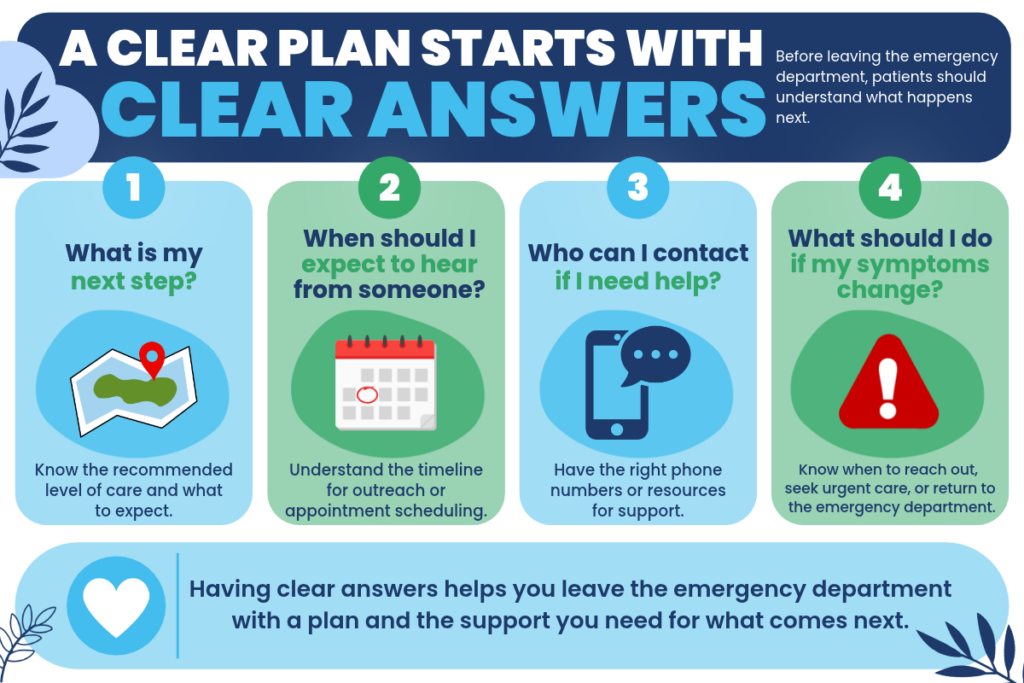
Effective follow-up planning begins before the patient leaves the emergency department. Clinicians can use this time to explain recommended treatment, address immediate concerns, and identify practical barriers that could interfere with the patient’s ability to follow the plan.
Discharge planning should reflect each patient’s circumstances. Someone with reliable transportation, an established psychiatrist, and a supportive home environment may need a different level of support than someone who has never received behavioral health treatment or has difficulty accessing community services.
Clear communication is especially important when patients are experiencing emotional distress. Medical terminology, lengthy instructions, and unfamiliar referral processes can add to the confusion during an already difficult experience.
Healthcare teams can support patient understanding by using straightforward language, confirming that patients understand the next steps, and providing appropriate contact information. When possible, scheduling an appointment or establishing a direct connection with the receiving provider before discharge can help patients move forward with follow-up care.
For patients at risk of suicide, discharge planning may require additional safety measures. These can include developing a collaborative safety plan, identifying warning signs, discussing coping strategies, and outlining steps to take if a crisis occurs.
Evidence supports the importance of structured approaches. The 2023 Emergency Department Safety Assessment and Follow-up Evaluation 2 (ED-SAFE 2) trial evaluated a suicide prevention quality improvement program across eight emergency departments.
Among discharged patients who screened positive for suicide risk, the six-month rate of suicide-related acute care or death was 21.0% during the baseline phase and 15.3% during the maintenance phase. The intervention included suicide risk screening, collaborative safety planning, and quality improvement efforts (Boudreaux et al., 2023).
These findings apply to patients who screened positive for suicide risk and reflect the effects of the broader intervention, rather than any single component. They highlight the importance of consistent safety procedures and clearly defined discharge practices.
Creating a Reliable Connection to Continued Treatment
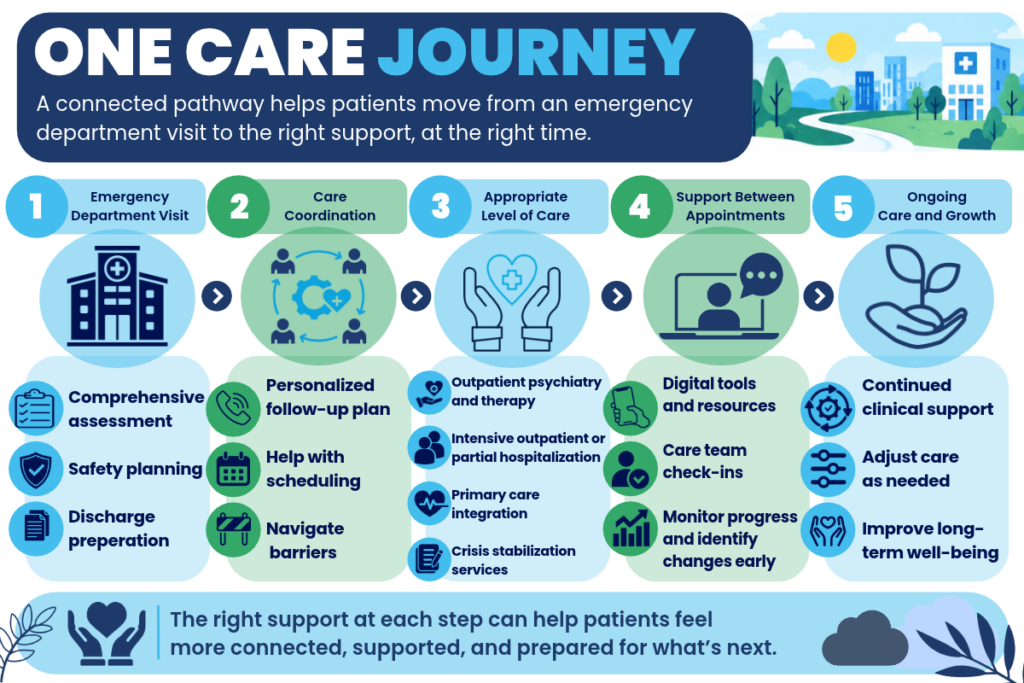
Once the discharge plan has been established, the next challenge is helping patients access the services they need.
Behavioral health needs vary considerably. Some individuals may benefit from routine outpatient psychotherapy or psychiatric medication management, while others may require more structured treatment, closer monitoring, or crisis services.
A well-designed pathway should account for these differences rather than directing every patient through the same referral process.
Matching Patients With Appropriate Services
Clinical assessment, symptom severity, safety considerations, and personal circumstances should guide treatment recommendations.
For some patients, continued care may involve individual therapy, psychiatric consultations, or medication management. Others may require intensive outpatient programs, partial hospitalization, crisis stabilization, or behavioral health services integrated into primary care.
The availability of having multiple treatment options allows healthcare teams to recommend services that better reflect each patient’s needs. However, identifying the appropriate service is only one part of the process. Patients must also be able to access that service within a clinically appropriate timeframe.
Reducing Barriers Through Care Coordination
Care coordination helps connect the recommendations made during an emergency department into connections with services available after discharge.
This may involve contacting patients following discharge, assisting with appointment scheduling, confirming referral acceptance, or identifying difficulties that could prevent treatment from beginning.
For example, a patient referred to outpatient psychiatry may discover that the nearest provider has a lengthy waiting list. A care coordinator can help explore available alternatives, including virtual appointments when clinically appropriate.
Coordination can also improve communication between hospital clinicians, outpatient providers, primary care teams, and community organizations. When information moves more consistently between services, healthcare teams are better positioned to maintain continuity and respond to changing needs.
Maintaining Visibility Across the Care Pathway
A referral is not complete simply because it has been sent. It should also involve confirming that the patient has connected with the receiving service and has a clear pathway to continued care.
Healthcare organizations can strengthen this process through closed-loop referrals, in which the referring team receives information about whether the patient was contacted, accepted into a program, or attended an appointment.
This visibility is particularly valuable for patients who require more intensive support or have repeated emergency department visits. It helps care teams identify gaps in the transitions and determine whether additional outreach or reassessment is needed.
How Precise Behavioral Supports a Connected Care Pathway
Addressing gaps in post-discharge care requires clinical expertise, care coordination, and systems that support communication across healthcare settings.
Precise Behavioral brings these capabilities together through its clinical services, ConnectED post-discharge program, digital engagement tools, and Behavioral Health Operating System (BOS). Together, these solutions support healthcare organizations in addressing behavioral health needs across different stages of care.
Clinical Expertise When Decisions Matter Most
Timely psychiatric assessment can help emergency department teams determine whether patients require hospitalization, crisis stabilization, or outpatient treatment.
Precise Clinical provides access to behavioral health specialists through services such as emergency and inpatient telepsychiatry. These services support clinical assessments, treatment recommendations, and decisions about the appropriate level of care.
Access to specialized clinicians can be particularly valuable for hospitals with limited psychiatric coverage or fluctuating demand for behavioral health consultations. By integrating behavioral health expertise into hospital workflows can support clinical decision-making and discharge planning.
Post-Discharge Coordination Through ConnectED
Precise Behavioral’s ConnectED program focuses specifically on the period following emergency department discharge.
The program combines patient care coordination, virtual access to therapists and psychiatrists, and digital monitoring to support continued engagement with recommended treatment.
Care coordinators can help patients navigate the transition, while remote monitoring and triage capabilities are designed to help identify changing needs that may warrant further clinical attention.
ConnectED also supports organizational efforts to address the Healthcare Effectiveness Data and Information Set (HEDIS) measure known as Follow-Up After Emergency Department Visit for Mental Illness (FUM), which evaluates timely outpatient follow-up after qualifying emergency department visits.
Digital Tools That Support Clinical Visibility
Digital health technologies can provide additional information about patient needs after discharge, particularly when regular in-person contact is difficult.
Precise Digital includes patient-facing resources, such as mood monitoring, clinical assessments, educational content, and guided support tools. These capabilities can encourage patient participation while providing information that may be useful to clinical teams.
When connected to appropriate monitoring and response workflows, digital information can help clinicians identify patients who may benefit from additional outreach or reassessment.
However, technology should complement professional care rather than replace it. Successful implementation depends on clinical oversight, accessible tools, and clearly defined procedures for reviewing and responding to information.
Connecting Clinical and Operational Systems
Even well-designed clinical programs can face difficulties when referrals, patient records, communication tools, and reporting systems operate independently.
Precise Behavioral’s Behavioral Health Operating System provides a modular technology framework that connects functions involved in behavioral healthcare delivery.
Its capabilities include patient engagement tools, clinician portals, referral management, telehealth, work queues, analytics, and billing support. Organizations can adopt components according to their operational needs and expand their use over time.
By improving access to information across the care process, connected systems can help healthcare teams coordinate responsibilities and identify gaps that might otherwise go unnoticed.
Making Follow-Up More Dependable in Everyday Practice
Technology and clinical resources provide an important foundation, but successful post-discharge programs also depend on how consistently healthcare teams carry out their responsibilities.
For example, a hospital may have a system that automatically generates follow-up referrals. However, if no team member is responsible for reviewing incomplete referrals, patients may still experience delays.
Similarly, digital monitoring may identify a concerning change in a patient’s reported symptoms, but the information is only useful when an appropriate professional reviews it and determines whether action is necessary.
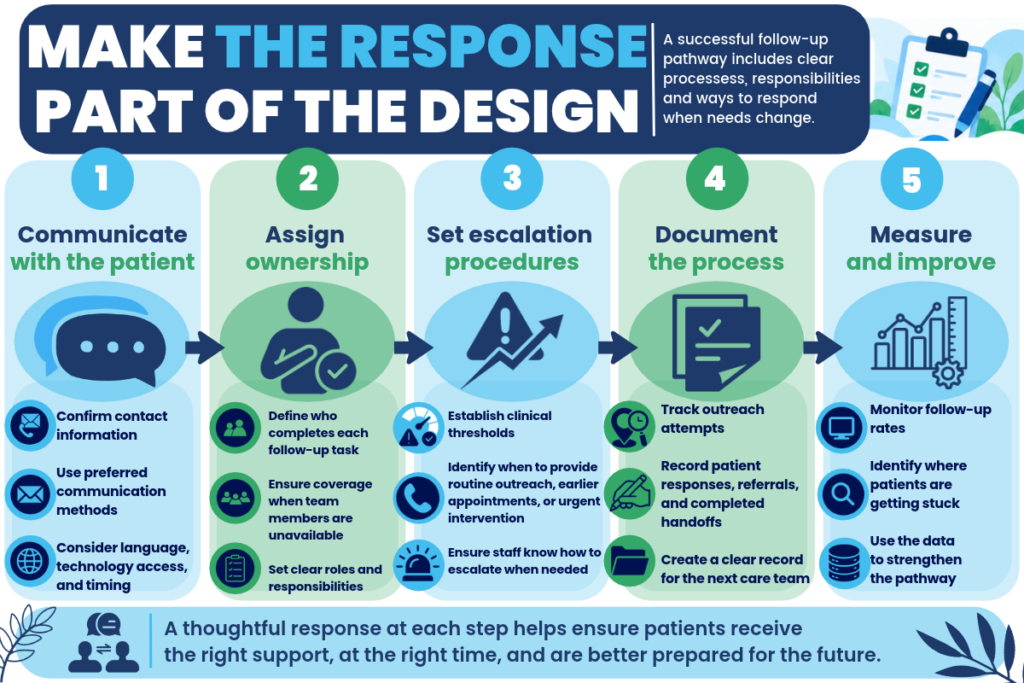
Healthcare organizations should therefore establish clear procedures that connect information with clinical decisions.
This includes defining staff responsibilities, maintaining accurate patient contact information, establishing appropriate response timelines, and ensuring that referrals and outreach activities are documented.
Organizations should also account for patients who are difficult to reach. A missed call or unanswered message does not necessarily indicate that someone is unwilling to receive care. Communication barriers, outdated contact information, limited internet access, or competing responsibilities may prevent patients from responding.
Flexible outreach methods and clearly assigned follow-up responsibilities can help organizations identify these challenges and determine the next appropriate action.
Clinical escalation procedures are equally important. Teams need to distinguish between situations that require routine follow-up, an earlier appointment, urgent reassessment, or emergency intervention.
When these processes are established in advance, healthcare organizations are better positioned to respond consistently while maintaining appropriate patient safety standards.
Measuring the Success of Behavioral Health Follow-Up
Improving continuity of care requires more than implementing new services. Healthcare organizations also need to evaluate whether their efforts are helping patients connect with appropriate treatment.
Traditional administrative measures, such as the number of referrals generated or outreach calls completed, provide useful operational information. However, they do not necessarily indicate whether patients received care.
A more comprehensive evaluation should consider the patient’s experience throughout the transition, including how quickly contact was established, whether the recommended services were available, and whether treatment actually began.
Important performance indicators may include:
- Timeliness of follow-up: The percentage of eligible patients who complete follow-up visits within seven and 30 days after discharge.
- Successful patient engagement: The proportion of patients who respond to outreach and engaged in the recommended care plan.
- Referral completion: Whether patients are successfully connected to the appropriate provider or treatment program.
- Emergency department revisits: The frequency of return visits for behavioral health concerns, interpreted alongside clinical needs and other relevant factors.
- Patient experience: Whether individuals understand their discharge instructions, feel supported during the transition, and can access the recommended services.
These indicators become more valuable when examined together.
For instance, an organization may have strong appointment-scheduling rates while continuing to experience low attendance. Further evaluation might reveal that patients face transportation difficulties, appointment delays, or other barriers that scheduling data alone cannot identify.
Healthcare teams can use these findings to refine outreach strategies, improve referral relationships, and make treatment options more accessible.
Measurement should ultimately support continuous improvement rather than simply document completed activities. The goal is to understand where patients encounter difficulties and identify practical opportunities to strengthen the care pathway.
Building a Better Path Forward
A behavioral health emergency department visit may address an immediate crisis, but recovery and continued treatment often require additional care beyond the hospital.
For patients, a better transition means understanding what happens next, knowing where to turn for assistance, and having a realistic opportunity to access recommended treatment. For healthcare organizations, it means creating dependable processes that connect clinical decisions with timely follow-up, coordinated services, and ongoing evaluation.
Achieving this requires collaboration across emergency departments, behavioral health specialists, outpatient providers, care coordinators, and the technology systems that support their work.
Precise Behavioral’s integrated clinical, digital, and operational solutions help healthcare organizations support these connections and strengthen the transition from emergency care to continued treatment.
The measure of a successful discharge is not simply that a patient leaves the emergency department with a plan. It is whether that plan creates a meaningful path to the care they need next.
Sources:
- Hugunin, J., Davis, M., Larkin, C., Baek, J., Skehan, B., & Lapane, K. L. (2022, October 12). Established outpatient care and follow-up after acute psychiatric service use among youths and young adults | Psychiatric Services. Psychiatry Online. https://psychiatryonline.org/doi/10.1176/appi.ps.202200047
- Boudreaux, E. D., Larkin, C, et al. (2023, May 17). Effect of an Emergency Department Process Improvement Package on Suicide Prevention The ED-SAFE 2 Cluster Randomized Clinical Trial. JAMA Network. https://jamanetwork.com/journals/jamapsychiatry/fullarticle/2804647
Written by Gabriella Aaron
About the Authors
Gabriella Aaron is a Clinical Research and Content Development Specialist at Precise Behavioral, Inc., with a background in Medical Microbiology and a passion for digital mental health solutions.
Editorial Contributors
This piece was edited by Greta Baker and Kirsten Guiliano.