The Growing Mental Health Access Gap
Mental health needs continue to grow across the United States, yet access to care has not kept pace. As rates of depression, anxiety, and other mental health conditions increase, demand for behavioral health services continues to outpace the available workforce. More than 148 million Americans live in areas designated by the Health Resources and Services Administration (HRSA) as Mental Health Professional Shortage Areas, making timely access to care difficult for many communities (HRSA, n.d.). Even when individuals recognize they need help and actively seek treatment, they often face weeks or months waiting for therapy or psychiatric appointments, delaying access to interventions that may prevent symptoms from worsening.
The consequences of delayed care extend beyond prolonged emotional distress. Research has shown that untreated mental health conditions are associated with worsening symptoms, reduced quality of life, increased healthcare utilization, and a greater likelihood of experiencing a behavioral health crisis that may require emergency department visits or hospitalization. Delayed access to treatment can also affect an individual’s ability to succeed at school, maintain employment, build and sustain relationships, and manage the responsibilities of daily life (Substance Abuse and Mental Health Services Administration, 2025).
Digital behavioral health tools have emerged as one strategy to help address these challenges. While they are not intended to replace licensed mental health professionals, they can expand access to evidence-based resources, reinforce skills learned in treatment, support self-management between appointments, and help individuals engage with care sooner while waiting for or receiving clinical services.
Digital Support Throughout the Care Journey
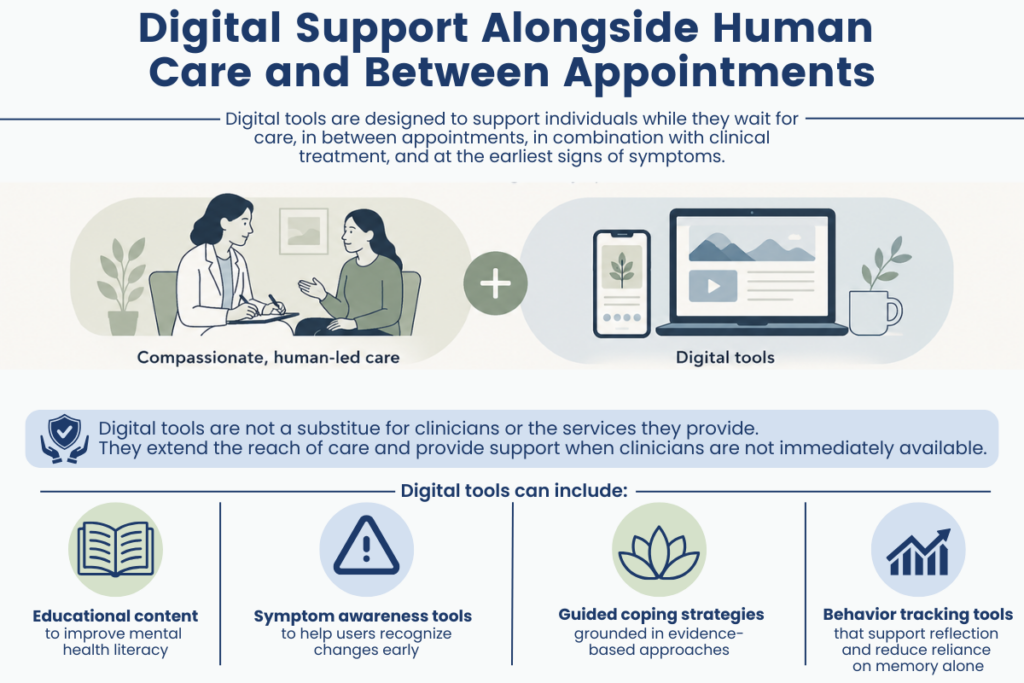
Digital behavioral health tools are designed to complement, not replace, traditional mental health care. They provide support across the continuum of care, including while individuals are waiting for services, between appointments, alongside clinical treatment, and during the early stages of symptom development when intervention may be most beneficial.
Rather than serving as a substitute for licensed mental health professionals, digital tools extend the reach of care by providing evidence-based resources and support outside of scheduled clinical encounters. They help individuals remain engaged in their mental health, reinforce therapeutic skills, and promote continuity of care between visits.
Common features of digital behavioral health tools include:
- Mental health education that improves mental health literacy and helps individuals better understand symptoms, diagnoses, treatment options, and available resources.
- Symptom monitoring and self-assessments that encourage individuals to recognize changes in their mental health and identify when additional support may be needed.
- Evidence-based coping strategies, including mindfulness exercises, stress management techniques, grounding exercises, cognitive behavioral therapy (CBT) skills, and other therapeutic interventions that can be practiced independently.
- Mood, behavior, and habit tracking that promotes self-awareness, identifies patterns over time, and provides a more accurate picture of progress than relying on memory alone.
- Personalized reminders and wellness activities that encourage healthy routines, reinforce treatment goals, and support ongoing engagement in care.
- Secure communication and care coordination features, when integrated with clinical services, can facilitate collaboration between patients and their care team.
By providing timely support outside of traditional clinical settings, digital behavioral health tools can help individuals stay connected to their care, build coping skills, and take a more active role in managing their mental health.
Why Cognitive Behavioral Therapy (CBT) Works Well Digitally
Cognitive Behavioral Therapy (CBT) is an evidence-based treatment model that helps individuals understand the relationship between their thoughts, emotions, and behaviors. It focuses on identifying and modifying unhelpful cognitive patterns and behaviors, including avoidance and safety-seeking behaviors, that may contribute to ongoing distress (Nakao et al., 2021).
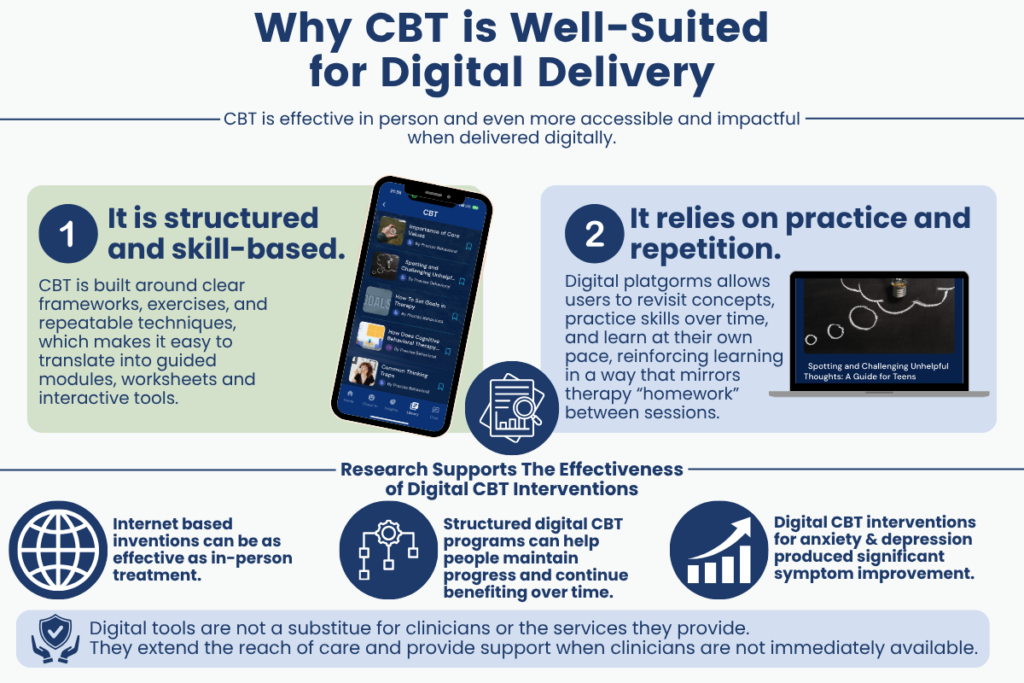
CBT is particularly well suited for digital delivery because it is structured, skills-based, and practice-oriented. Rather than relying solely on conversation, CBT teaches strategies that can be learned, practiced, and reinforced through guided exercises, interactive activities, journaling, and real-world application. Digital platforms make these tools available anytime, allowing individuals to progress at their own pace, revisit concepts as needed, and continue practicing skills between therapy sessions or while waiting to begin treatment.
A growing body of research demonstrates that digital CBT can produce meaningful clinical benefits:
Comparable to face-to-face therapy: A 2023 systematic review and meta-analysis published in World Psychiatry found that therapist-supported internet-based CBT produces clinical outcomes comparable to traditional face-to-face CBT across a wide range of psychiatric conditions while improving accessibility and convenience (Hedman-Lagerlöf et al., 2023).
Sustained clinical benefit: A 2023 meta-analysis of internet-based CBT self-help programs demonstrated that treatment gains for depression can be maintained over time, supporting the long-term effectiveness of structured digital CBT interventions (Jackson et al., 2023).
Effective for reducing symptoms of depression and anxiety: A 2023 systematic review of randomized controlled trials found that digital CBT interventions consistently improve users’ ability to learn and apply CBT skills, resulting in meaningful reductions in symptoms of depression and anxiety (Jackson et al., 2023).
The evidence consistently demonstrates that digital CBT is most effective when it is evidence-based, interactive, and designed to encourage regular engagement. By extending therapeutic practice beyond the therapy office, digital CBT enables individuals to strengthen coping skills, reinforce learning, and remain actively engaged in managing their mental health throughout their care journey.
Why Engagement Matters in Digital Behavioral Health
Access to digital mental health resources alone does not guarantee meaningful outcomes. For digital behavioral health tools to be effective, individuals must be able to engage with content, practice skills, and apply strategies in their daily lives (Forbes et al., 2023).
Engagement transforms digital resources from passive information into active skill building. Features such as guided exercises, journaling, symptom tracking, personalized content, and structured learning pathways encourage individuals to reflect on their experiences, recognize patterns, and practice evidence-based strategies over time (Boucher et al., 2024).
Consistent engagement also supports continuity between clinical encounters. Just as traditional therapy often includes reflection and skill practice between sessions, digital tools can provide opportunities to reinforce therapeutic concepts outside of scheduled appointments.
Effective digital behavioral health platforms are designed to make engagement achievable by providing relevant content at the right time, supporting individual progress, and helping users build sustainable habits that contribute to improved mental health management.
Core Components of a Digital Behavioral Health Platform
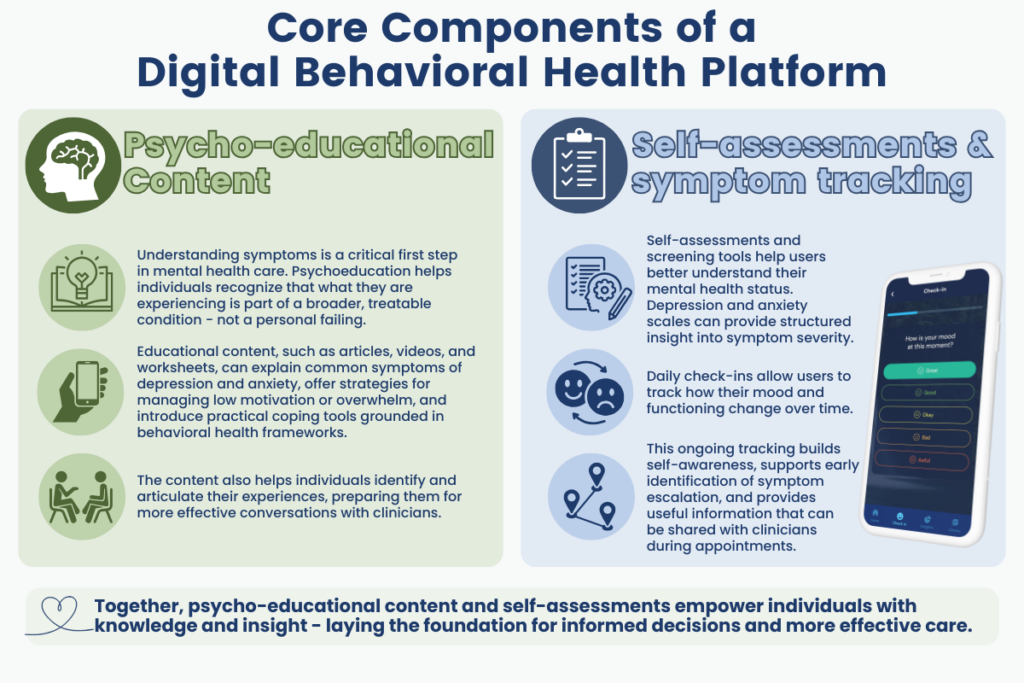
Digital behavioral health platforms combine evidence-based resources, self-guided tools, and tracking capabilities to support individuals throughout their mental health journey. These tools are designed to increase access to support, encourage engagement, reinforce clinical care, and help individuals develop greater awareness of their mental health needs.
Psychoeducational content
Understanding symptoms and mental health conditions is often an important first step in seeking support. Psychoeducation helps individuals recognize their experiences, understand common symptoms, and learn that many mental health concerns are treatable with appropriate support.
Educational resources, including articles, videos, and worksheets, can provide information about conditions such as depression and anxiety, offer strategies for managing challenges like low motivation or feeling overwhelmed, and introduce practical coping tools grounded in evidence-based behavioral health approaches.
This content can also help individuals develop the language to describe their experiences, supporting more informed and productive conversations with clinicians and care teams.
Self-assessments and symptom tracking
Self-assessments and symptom tracking tools help individuals develop greater awareness of their mental health over time. Standardized screening measures for depression and anxiety can provide structured insight into symptom severity, while regular check-ins allow users to reflect on changes in mood, behaviors, and daily functioning.
Ongoing tracking encourages self-reflection and can help individuals recognize patterns, monitor changes over time, and share meaningful information with clinicians. These insights can support more personalized conversations and help care teams better understand an individual’s experiences between appointments.
Guided Journeys: Structured CBT Skill Building
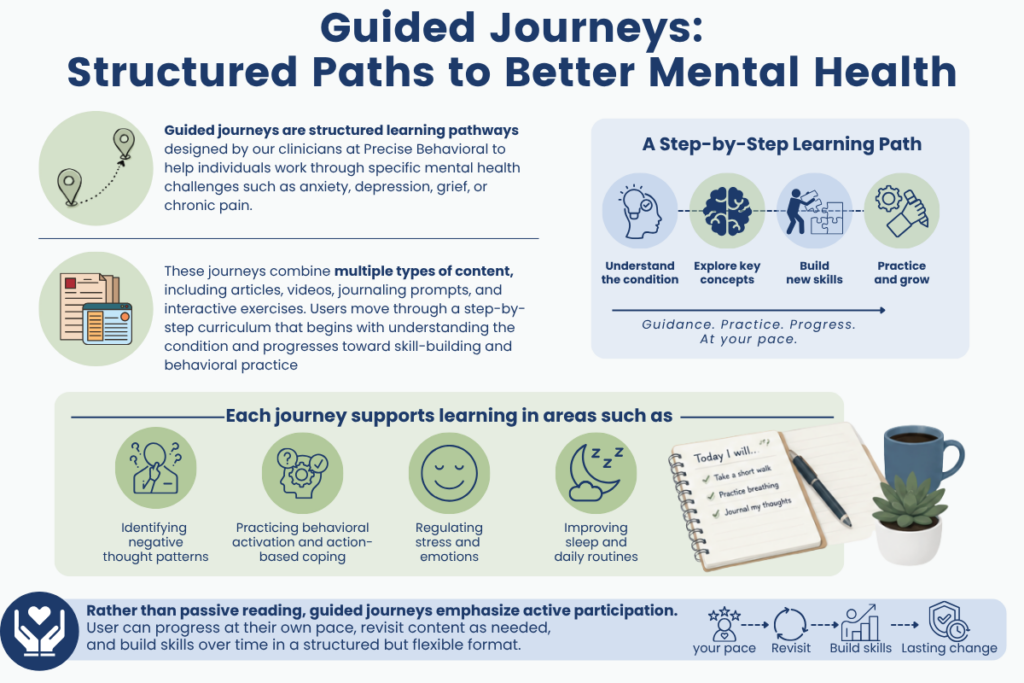
Guided journeys are structured learning pathways designed by Precise Behavioral’s clinical team to help individuals work through specific mental health challenges, including anxiety, depression, grief, chronic pain, and suicide prevention.
These journeys combine multiple types of evidence-based content, including educational materials, videos, journaling prompts, reflection activities, and interactive exercises. Users move through a structured curriculum that begins with understanding their experiences and progresses toward skill development, behavioral practice, and ongoing self-management strategies.
Each journey supports learning in areas such as:
- Identifying unhelpful thought patterns and cognitive distortions
- Practicing behavioral activation and action-based coping strategies
- Developing emotional regulation and stress management skills
- Improving sleep and daily routines
- Building coping strategies and safety skills for managing periods of increased distress
The suicide prevention-focused journey provides additional support by helping adults recognize warning signs, develop coping strategies, strengthen protective factors, and connect with appropriate resources when additional support is needed. These tools are designed to complement, not replace, professional assessment and crisis intervention when safety concerns are present.
Rather than passive information consumption, guided journeys emphasize active participation. Users can progress at their own pace, revisit content as needed, and continue practicing skills over time in a structured but flexible format.
Digital Tools as a Complement to Clinical Care
Digital behavioral health is designed to complement, not replace, the expertise and therapeutic relationship provided by clinicians. When integrated into care, these tools can extend the impact of treatment by supporting continued learning, skill practice, and self-reflection outside of scheduled visits.
Digital tools can help:
- Reinforce skills learned during therapy
- Support between-session practice and therapeutic homework
- Encourage ongoing engagement with mental health goals
- Provide additional insight into symptoms, behaviors, and progress over time
For clinicians, these tools can provide additional context about a person’s experiences between appointments, supporting more informed conversations, and helping create a more continuous care experience.
At Precise Behavioral, our digital applications include educational content through articles and videos, CBT explanations and exercises, mood and symptom tracking, journaling features, structured guided journeys, and additional resources designed to support individuals throughout their mental health journey.
The Future of Accessible Behavioral Health Care
Technology is becoming an increasingly important component of modern behavioral health care. Digital tools have the potential to expand access to evidence-based resources, support engagement, and enable more continuous models of care.
The future of behavioral health is not digital versus in-person care. It is integrated care, where technology works alongside clinicians to extend support, improve accessibility, and enhance the overall care experience.
At Precise Behavioral, our goal is to combine clinical expertise with digital accessibility to provide practical, evidence-based tools that help individuals build skills, stay connected to care, and access support when they need it.
Sources:
- Andersson, G., & Titov, N. (2014). Advantages and limitations of Internet-based interventions for common mental disorders. World psychiatry : official journal of the World Psychiatric Association (WPA), 13(1), 4–11. https://doi.org/10.1002/wps.20083
- Boucher, E. M., & Raiker, J. S. (2024). Engagement and retention in digital mental health interventions: A narrative review. BMC Digital Health, 2, 52. https://doi.org/10.1186/s44247-024-00105-9
- Forbes, A., Keleher, M. R., Venditto, M., & DiBiasi, F. (2023). Assessing patient adherence to and engagement with digital interventions for depression in clinical trials: Systematic literature review. Journal of Medical Internet Research, 25, e43727. https://doi.org/10.2196/43727
- Health Resources and Services Administration. (n.d.). Health workforce shortage areas. U.S. Department of Health and Human Services. https://data.hrsa.gov/topics/health-workforce/shortage-areas/dashboard
- Hedman-Lagerlöf, E., Carlbring, P., Svärdman, F., Riper, H., Cuijpers, P., & Andersson, G. (2023). Therapist-supported Internet-based cognitive behaviour therapy yields similar effects as face-to-face therapy for psychiatric and somatic disorders: An updated systematic review and meta-analysis. World Psychiatry, 22(2), 305–314. https://onlinelibrary.wiley.com/doi/10.1002/wps.21088
- Jackson, H. M., Calear, A. L., Batterham, P. J., Ohan, J. L., Farmer, G. M., & Farrer, L. M. (2023). Skill enactment and knowledge acquisition in digital cognitive behavioral therapy for depression and anxiety: Systematic review of randomized controlled trials. Journal of Medical Internet Research, 25, e44673. https://doi.org/10.2196/44673
- Nakao, M., Shirotsuki, K., & Sugaya, N. (2021). Cognitive-behavioral therapy for management of mental health and stress-related disorders: Recent advances in techniques and technologies. BioPsychoSocial medicine, 15(1), 16. https://doi.org/10.1186/s13030-021-00219-w
- Richards, D., & Richardson, T. (2012). Computer-based psychological treatments for depression: a systematic review and meta-analysis. Clinical psychology review, 32(4), 329–342. https://doi.org/10.1016/j.cpr.2012.02.004
- Substance Abuse and Mental Health Services Administration. (2025). Key substance use and mental health indicators in the United States: Results from the 2024 National Survey on Drug Use and Health (HHS Publication No. PEP25-07-007, NSDUH Series H-60). Center for Behavioral Health Statistics and Quality. https://www.samhsa.gov/data/sites/default/files/reports/rpt56287/2024-nsduh-annual-national-report.pdf
- Venkatesan, A., Rahimi, L., Kaur, M., & Mosunic, C. (2020). Digital Cognitive Behavior Therapy Intervention for Depression and Anxiety: Retrospective Study. JMIR mental health, 7(8), e21304. https://doi.org/10.2196/21304
Written by Emily Yi and Greta Baker
About the Authors
Emily Yi is a licensed clinical social worker who works with adolescents and families while also supporting behavioral health innovation through digital care coordination. In her role as a clinical app monitor for Precise Behavioral, she helps connect therapists, primary care providers, and psychiatric specialists to improve patient outcomes.
Greta Baker is the Multimedia Content Coordinator at Precise Behavioral Inc., with a background in English Literature from the University of Virginia. She combines her passion for writing and mental health with her experience in digital communications to support advocacy and awareness.
Editorial Contributors
This piece was edited by Gabriella Aaron and Kirsten Guiliano.