Teens Are Struggling: Here’s How Thoughtful Tech Can Help
Current Day Snapshot
Adults often misinterpret teen behavior.
Many teens are not “being dramatic” or “just being teenagers.” They’re signaling that their nervous systems are overloaded, they are struggling, and they need help.
And the world keeps asking them to perform anyway.
Families and schools are witnessing more anxiety, mood symptoms, irritability, shutdown, sleep disruption, social conflict, and overwhelm. Some teens whisper, “I can’t do this,” while others shout it. Even though the need for support is clear, access is fragmented and slow, and many adolescents hesitate to ask for help or question whether adult providers can be trusted with what they are really experiencing.
This is where technology can play a role. Rather than positioning technology as a solution on its own, this approach focuses on clinically grounded digital mental health tools and online counseling that make care more accessible, especially for teens who find it hard to speak up or put their pain into words.
What the Data Says
Teenagers have long carried a reputation for being difficult, and this perception did not suddenly emerge with social media or current world stressors. However, since the widespread adoption of smartphones, there have been clear indicators of worsening irritability, anxiety, antisocial behavior, and depression in this age group. Numbers don’t replace lived experience, but they help anchor it. Data helps prevent us from minimizing or dismissing what is unfolding in real time and grounds what families, schools, and clinicians are observing. When we step back and examine trends over time, patterns emerge that reveal what is happening beneath the noise and emotion. In this way, data does not erase human experience; it helps protect it.
Persistent emotional distress:
Rates of persistent sadness and hopelessness among adolescents remain elevated, despite modest improvements in some recent indicators. (Centers for Disease Control and Prevention [CDC], 2024).
Long-term trends:
The CDC’s 2023 Youth Risk Behavior Survey highlights worsening mental health trends across the past decade, not only in recent years. These patterns include rising anxiety and depressive symptoms, with meaningful differences across gender, race, and other subgroups (Centers for Disease Control and Prevention [CDC], 2024).
A nuanced reality:
Pew Research Center’s 2024 survey reveals a gap between adult and teen perspectives. Parents report greater concern, while many teens describe social media as both supportive and harmful, reinforcing that today’s mental health landscape is complex rather than one-dimensional (Faverio et al., 2025).
What’s Driving the Rise
Pressure + pace
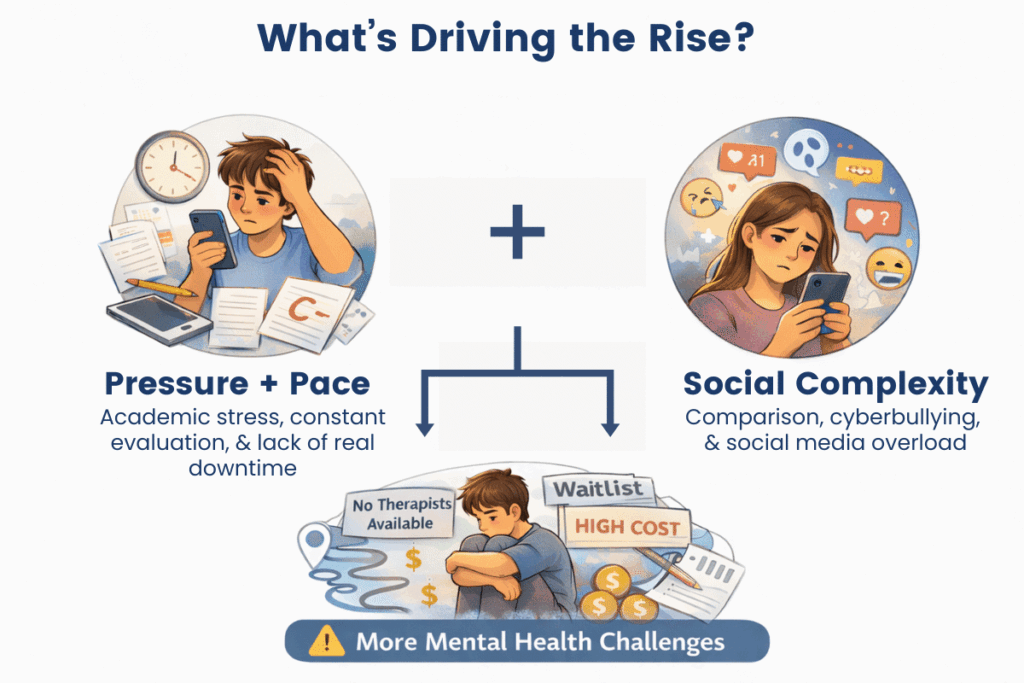
Adolescents tend to experience life with a strong focus on the present, which can amplify stress and make it feel difficult to escape. In the context of academic pressure, performance expectations, and ongoing evaluation by peers and parents, even relatively minor challenges can quickly become overwhelming. A single upcoming test or deadline may come to feel less like an isolated event and more like a totalizing source of stress.
Many adolescents today experience far less genuine downtime. What may appear to be relaxation, such as scrolling on a phone, often involves continuous streams of content and notifications that keep the brain engaged. Rather than providing relief, this constant stimulation can heighten mental strain, leaving teens feeling on edge and making it more difficult to recover from the pressures of the day.
In this day and age, teenagers are “always-on.”
Social Complexity (Online + Offline)
While online connections can offer meaningful support, they also carry significant risks. Ongoing comparison with peers, exposure to harassment or cyberbullying, and pressure to maintain an idealized image can negatively affect mental health. Even seemingly passive scrolling can disrupt sleep, leaving teens more fatigued, irritable, and less able to cope with everyday stressors.
The U.S. Surgeon General has emphasized that there is insufficient evidence to conclude that social media is safe for youth. Recent reports call for stronger safeguards, greater transparency from digital platforms, and continued research to better understand the effects on young people’s well-being (U.S. Department of Health and Human Services, 2023). Until such protections are established, adults and caregivers play a critical role in helping adolescents navigate the online environment responsibly.
Access Gaps
Access to appropriate mental health care remains a significant challenge for adolescents. In the United States, there are not enough clinicians to meet current demand, and even fewer are trained specifically to work with teens or to understand the distinct developmental and cultural challenges of their generation. Research indicates that adolescents are more likely to engage in and remain in therapy when providers are attuned to their developmental needs, motivations, and communication styles (Wilmots et al., 2019). In the absence of this specialized expertise, teens are more likely to disengage, discontinue treatment, or fail to receive adequate support.
These challenges are compounded by long waitlists, transportation barriers, high costs, and the persistent stigma surrounding help-seeking. Even when families recognize a need for support, these obstacles can delay or prevent timely care, leaving many adolescents to manage significant distress with limited guidance.
Support often arrives too late. In some cases, help is initiated only after academic performance declines, and parents become aware of concerning changes. In others, support follows strained relationships with parents, teachers, or peers, or after symptoms have escalated to a point where they can no longer be concealed. By the time care becomes available, the opportunity for early intervention, which can mitigate long-term consequences, has frequently already passed.
The Care Gap: Why “Traditional Only” Isn’t Meeting the Moment
Weekly therapy can be highly effective when the therapist and approach are well-matched. However, for many families, it may not be sufficient to address the daily moments when adolescents most need support. This can result from a mismatch between therapist and client, limited focus or availability from the therapist, or a lack of specialization in adolescent development and the unique needs and interests of teenagers.
Teens often need help between appointments: right when the fight happens, the panic hits, the spiral starts, or the loneliness shows up. Worksheets and exercises can be helpful, but many teens struggle to use them consistently without guidance and encouragement. Structured support, accountability, and “hand-holding” can be essential to help them build skills, see progress, and feel understood in real time.
Parents want and teenagers need guidance that is practical, non-judgmental, and genuinely effective. These are tools that can be used in the moment, as well as strategies for helping their teen navigate challenges without shame or conflict. When families have access to consistent, supportive, and teen-focused resources, the chances of meaningful improvement increase dramatically.
How Tech Can Help (When it’s Built Responsibly)
1. Faster access + lower friction
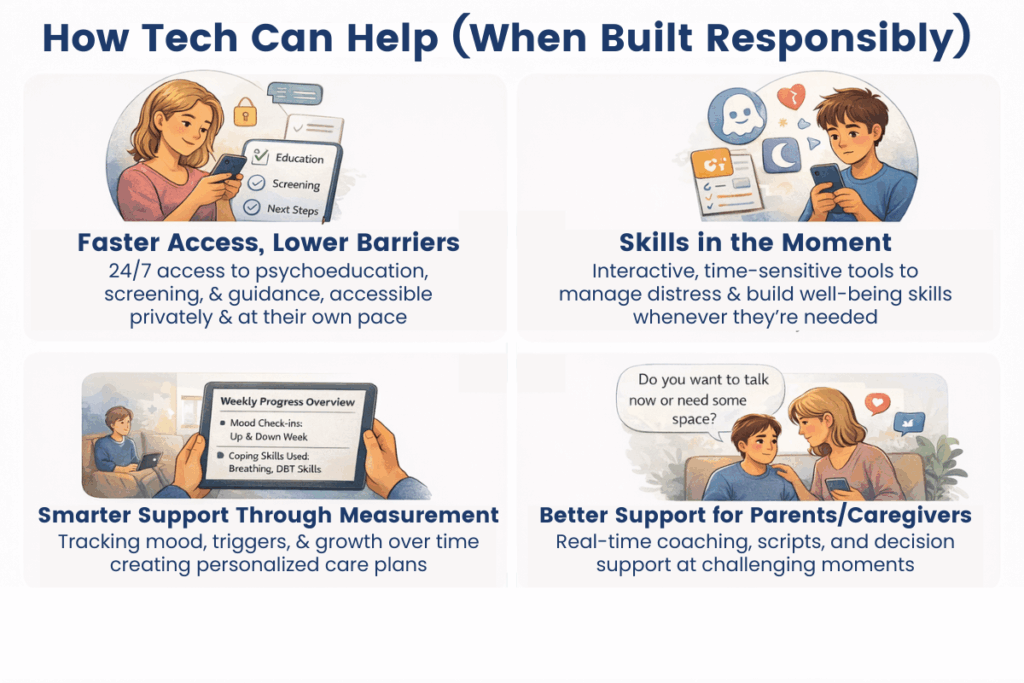
Digital mental health care allows immediate entry to psychoeducation, screening, and next-step guidance, removing many of the traditional barriers that slow access to care. Teens can engage privately, on their own schedule, without waiting for an appointment, transportation, or parental involvement. This low-stakes, confidential option helps them take the first step toward support, even before they feel ready to “talk to someone” in person. By lowering the friction, technology can connect teens to help at the moment they need it most.
2. Skills in the moment
Teenagers are able to learn buildable skills. These micro-inventions may include grounding, distress tolerance, thought reframes, and sleep supports. These buildable blocks add up to promoting the overall well-being while targeting small, manageable efforts they can employ.
Furthermore, this help is available whenever they need it. This offers them “just in time” prompts and support for when patterns show up during school-morning panic, late-night spirals, and all the other in-between moments. You don’t have to wait until your weekly therapy appointment.
3. Measurement that supports clinical care
What do these tools actually look like? They include simple mood and behavior check-ins that help identify patterns, surface triggers, and track changes over time without turning daily life into a spreadsheet. Designed to be quick and intuitive, they meet teens where they are and avoid lengthy worksheets or time-consuming exercises. All features are easily accessible on a smartphone.
The data teens share then becomes meaningful support for care: enabling earlier intervention, informing conversations with caregivers and clinicians, and helping create more personalized, responsive care plans.
4. Better support for parents/caregivers
Technology can also guide parents and caregivers with practical, real-time tools. Parent-facing coaching, scripts, and co-regulation strategies help reduce conflict and provide step-by-step support for what to do “right now” or “tonight.” This empowers families to intervene effectively during high-stress moments, reinforcing the skills teens are learning and strengthening overall support networks.
What “Good” Mental Health Tech Must Include
The most effective tools go beyond one-size-fits-all approaches and include features, such as:
Immediate access to guidance and screening: Teens can start learning about their mental health, complete quick self-assessments, and be routed to the right next steps without waiting for an appointment.
Practical skills for everyday moments: Tools can teach grounding techniques, distress tolerance, sleep supports, and thought reframes that teens can apply in real-time to manage stress and regulate emotions.
Just-in-time support: Alerts, prompts, or exercises are available exactly when teens need them, whether during a school-morning panic, a late-night spiral, or a stressful social situation.
Simple mood and behavior tracking: Quick check-ins let teens log how they feel and notice patterns over time, giving both them and their therapists valuable insight into triggers and progress.
Parent and caregiver guidance: Parent-facing tools provide scripts, coaching, and step-by-step strategies that help families respond effectively to high-stress moments and support skill-building at home.
Data-driven personalization: Information entered by teens can help therapists or digital programs tailor recommendations, monitor progress, and intervene earlier, creating a more individualized approach to care.
Where Precise Behavioral Fits
At Precise Behavioral, we offer Precise Digital, our advanced mental health platform that ensures these features and more. Our app is designed with the tools required to actually help.
We believe teens need support that matches real life: timely, skills-based, and human.
Tech extends care, improves continuity, and reduces barriers. It should be clinically guided, ethical, and built around outcomes, not engagement for engagement’s sake.
If you’re building mental health support for teens in a school, clinic, workplace, or any teen-centered setting, our tools are designed to support them. Explore our approach to measurement-based, skills-first care. Because when teens feel supported in the moments that matter, they thrive.
How Technology Supports Teens and Caregivers
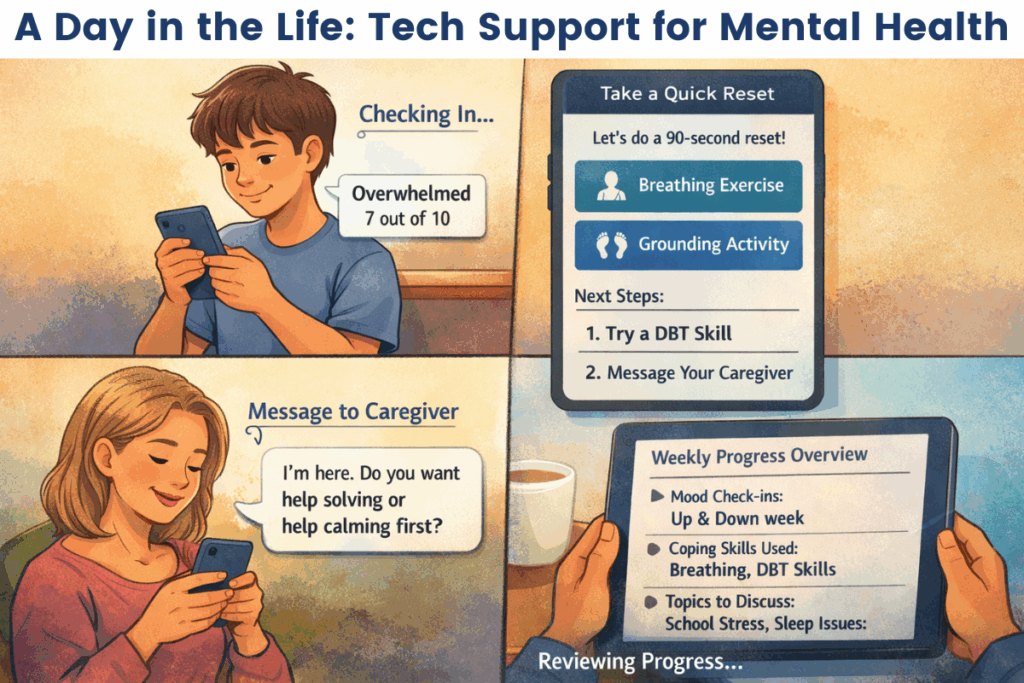
Below is a simple “day in the life” example that illustrates how thoughtfully designed technology can support both a teen and their caregiver in real time. It demonstrates how features like immediate regulation tools, guided communication, and continuity of care work together to help teens manage stress, stay connected, and ensure caregivers can respond quickly and effectively when support is needed.
Sources:
- Centers for Disease Control and Prevention. (2024, August 6). CDC data show improvements in youth mental health but need for safer and more supportive schools. U.S. Department of Health and Human Services. https://www.cdc.gov/media/releases/2024/p0806-youth-mental-health.html
- Centers for Disease Control and Prevention. (2024). Youth Risk Behavior Surveillance — United States, 2023 (MMWR Suppl. Vol. 73, No. 4). U.S. Department of Health and Human Services. https://www.cdc.gov/mmwr/volumes/73/su/pdfs/su7304-H.pdf
- Faverio, M., Anderson, M., & Park, E. (2025, April 22). Teens, social media and mental health. Pew Research Center. https://www.pewresearch.org/internet/2025/04/22/teens-social-media-and-mental-health/
- U.S. Department of Health and Human Services, Office of the Surgeon General. (2023). Social media and youth mental health: The U.S. Surgeon General’s advisory (PDF). https://www.hhs.gov/sites/default/files/sg-youth-mental-health-social-media-advisory.pdf
- Wilmots, E., Midgley, N., Thackeray, L., Reynolds, S., & Loades, M. (2019). The therapeutic relationship in cognitive behaviour therapy with depressed adolescents: A qualitative study of good-outcome cases. Psychology and Psychotherapy: Theory, Research and Practice, 93(2), 276–291. https://pubmed.ncbi.nlm.nih.gov/31119849/
Written by Emily Yi and Greta Baker
About the Authors
Emily is a Behavioral Health Consultant at Precise Behavioral, Inc., and a Licensed Clinical Social Worker (LCSW). She specializes in supporting emotionally intense teens, adults, and families through creative therapy.
Greta Baker is a Multimedia Content Coordinator at Precise Behavioral Inc., with a background in English Literature from the University of Virginia. She combines her passion for writing and mental health with her experience in digital communications to support advocacy and awareness.
Editorial Contributors
This piece was edited by Kirsten Guiliano and Gabriella Aaron.